Co-Authored with Ana Cris Medina
A Season of Fullness: The Story Behind the Monarch Collection
There is a particular moment when summer begins to loosen its hold on Oaxaca.
The rains arrive. Cicadas begin to sing, announcing the coming water. After a dry season that can be long and intense, the landscape responds almost immediately. For communities that still depend on seasonal rainfall for agriculture, these shifts are more than atmospheric. They are part of an intimate knowledge of place—a way of reading the sky, the earth, and the rhythms that have shaped life here for generations.
It was against this changing landscape that we began developing AMASOUK’s Fall/Winter 2026 collection with our artisan partners in Teotitlán del Valle.
And surprisingly, the idea at its heart began with a single word: maturity.

The Beauty of Becoming
Our previous collection had explored first growth and new beginnings, drawing inspiration from the experiences of younger Zapotec women and the daughters of the artisans with whom we work.
This time, the conversation moved somewhere different.
Many of the tejedoras we collaborate with are women in their forties and fifties. They are extraordinarily skilled craftspeople, but they are also mothers, daughters, businesswomen, teachers, community members, and keepers of knowledge accumulated over decades.
There is a groundedness to them that is difficult to describe until you have spent time in their presence.
They know their craft. They know themselves. They support families and communities while carrying traditions forward with remarkable strength and sensitivity. It was this stage of life—not youth, not decline, but fullness—that became our starting point.
Maturity, we began to realize, has its own kind of beauty.
It is the beauty of knowing. Of becoming. Of having lived enough to carry both memory and possibility at once.

Returning to the Symbols
Early in the design process, we gathered with the artisans in a room surrounded by rugs woven by different generations of their families.
One by one, the textiles were spread across the floor.
We talked about their symbols. Which motifs were newer? Which had been woven for generations? Which patterns still felt especially meaningful to the women creating them today?
Although the artisans are fluent in both traditional and contemporary visual languages, many spoke of feeling a particularly deep connection to the symbols inherited from their ancestors.
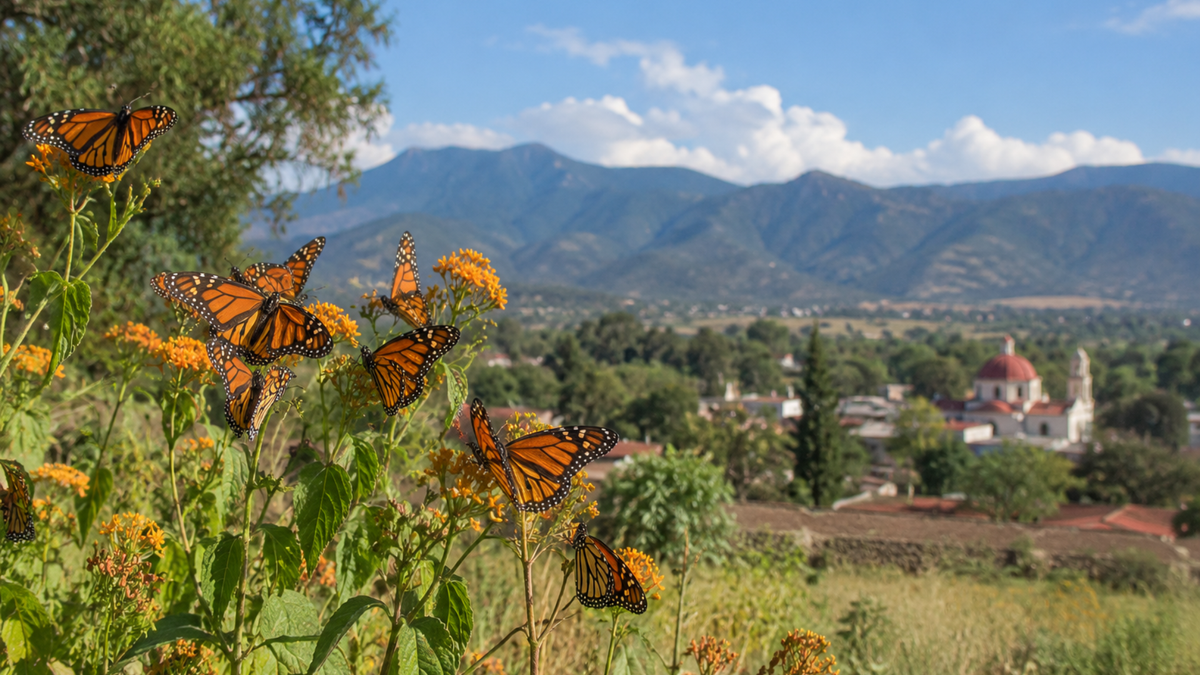
Among them was one motif that kept returning: the mariposa— the butterfly.
Within the textile traditions of Teotitlán del Valle, the butterfly carries associations with transformation, renewal, and connection. And importantly, it is rarely depicted alone. Butterflies appear together—a visual expression of the communal spirit woven deeply into indigenous life.
From there, the Monarch Collection began to take flight.

A Language Woven in Wool
The butterfly became less a literal theme than a thread running through the collection.
Its journey gave us a language for thinking about life itself: nourishment, flight, transformation, gathering, memory, rebirth, and light. Those ideas ultimately found their way into the names of the pieces—Mariposa, Néctar, Vuelo, Crisálida, Encuentro, Recuerdo, Renacer, and Candela.
But the story also lives within the patterns.
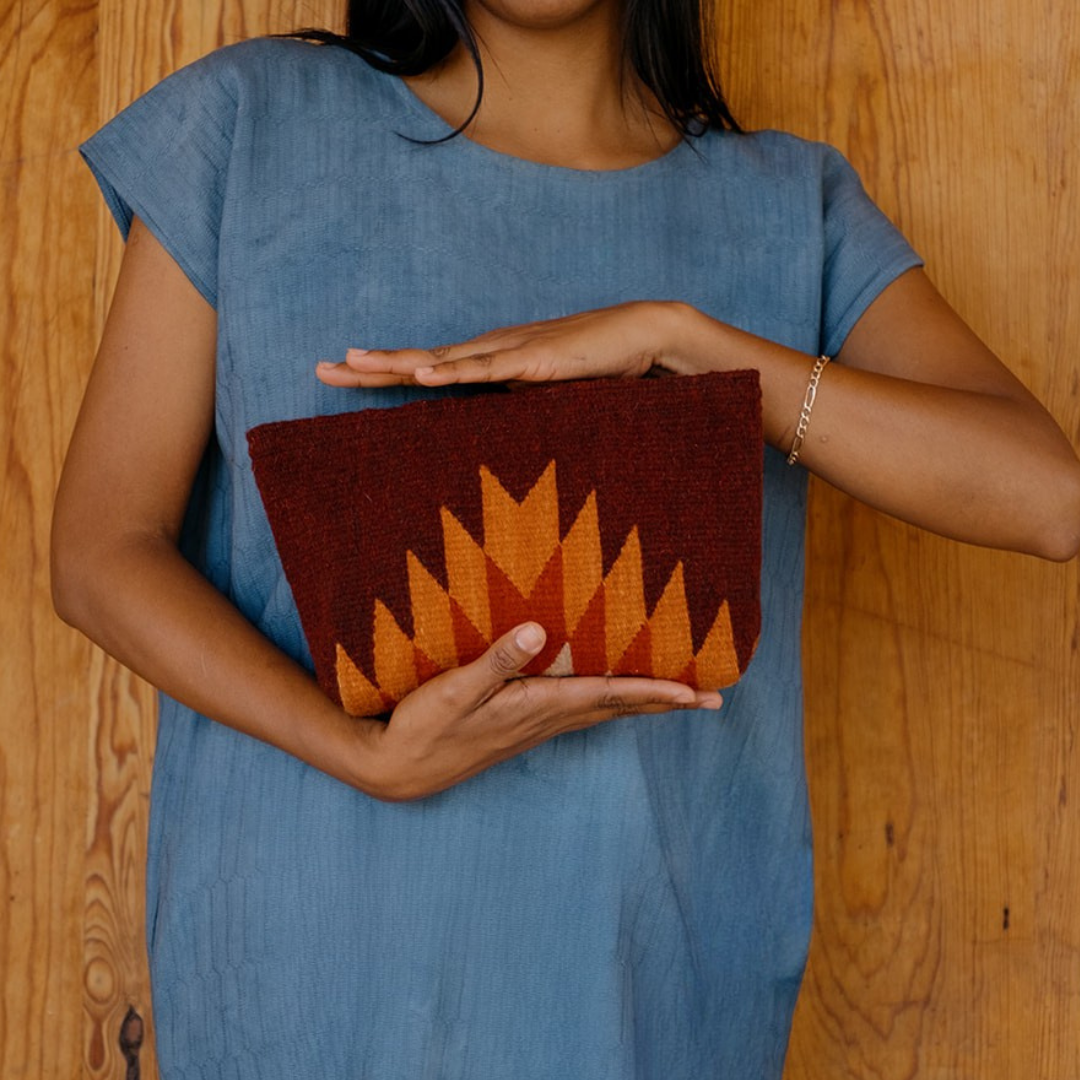
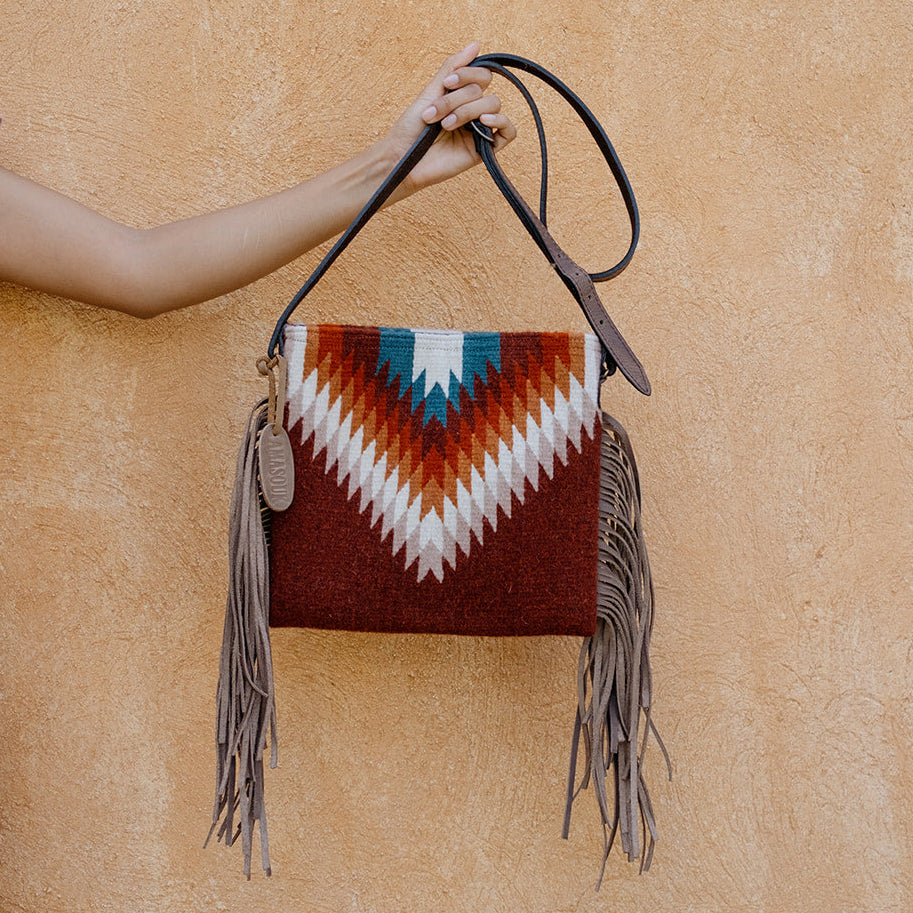
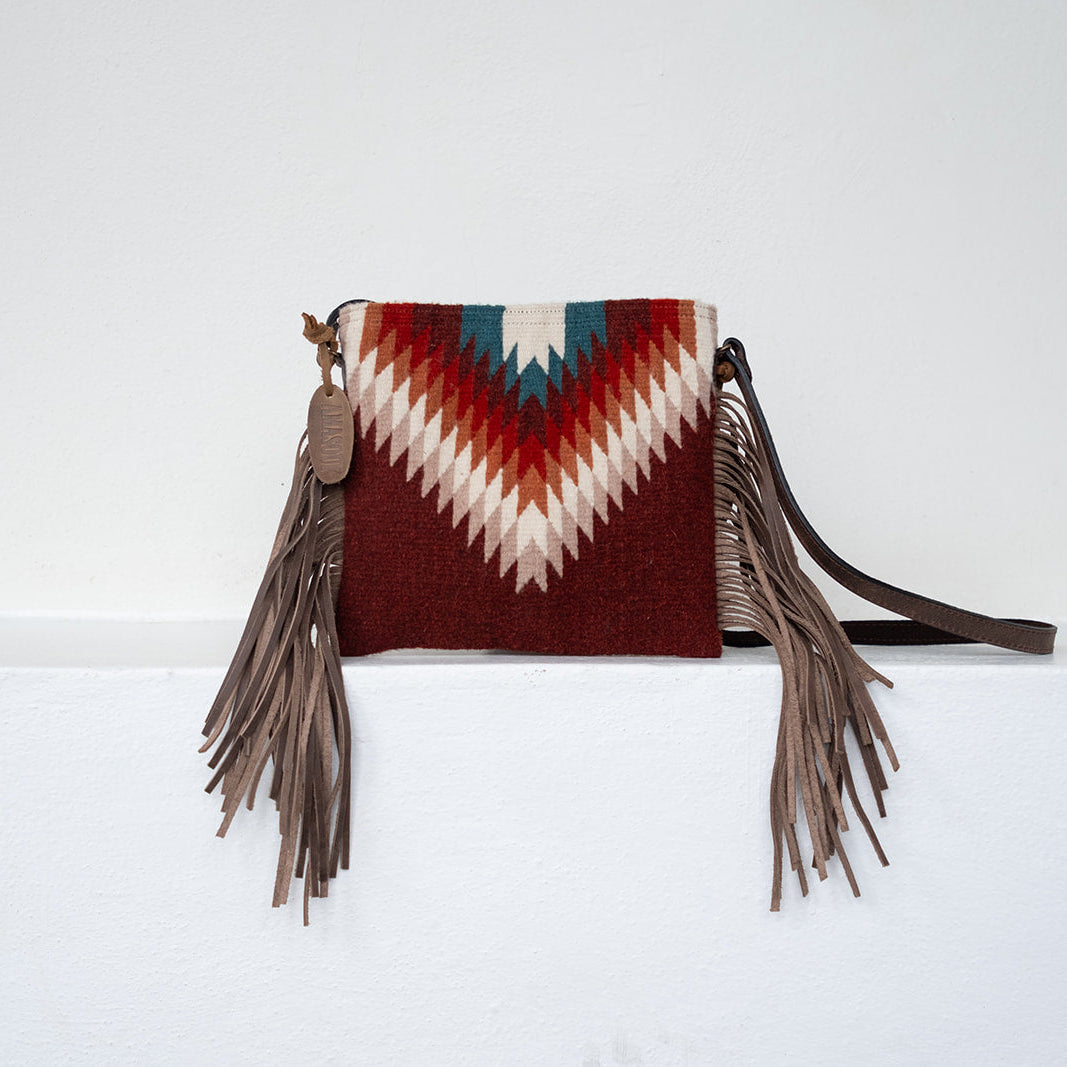
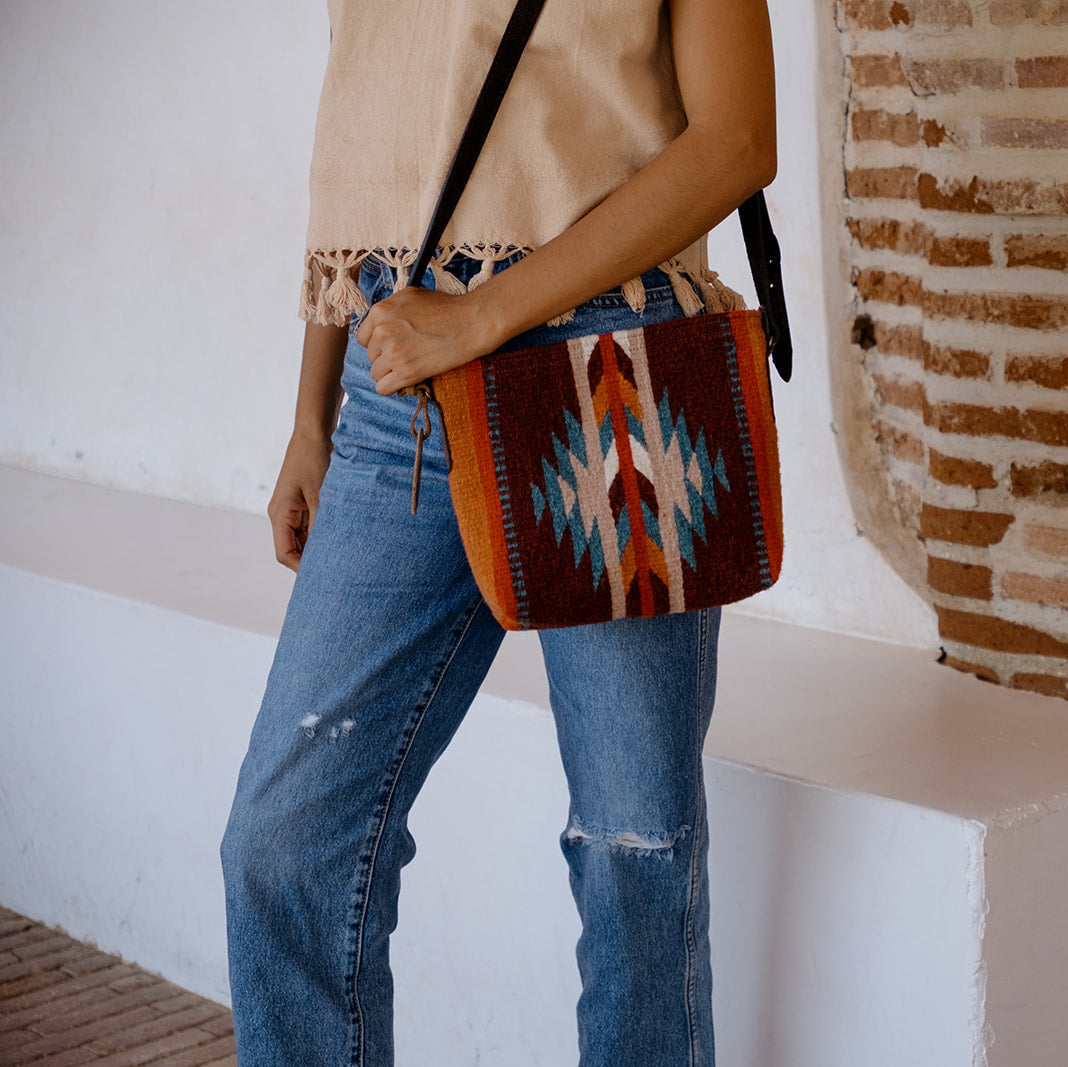
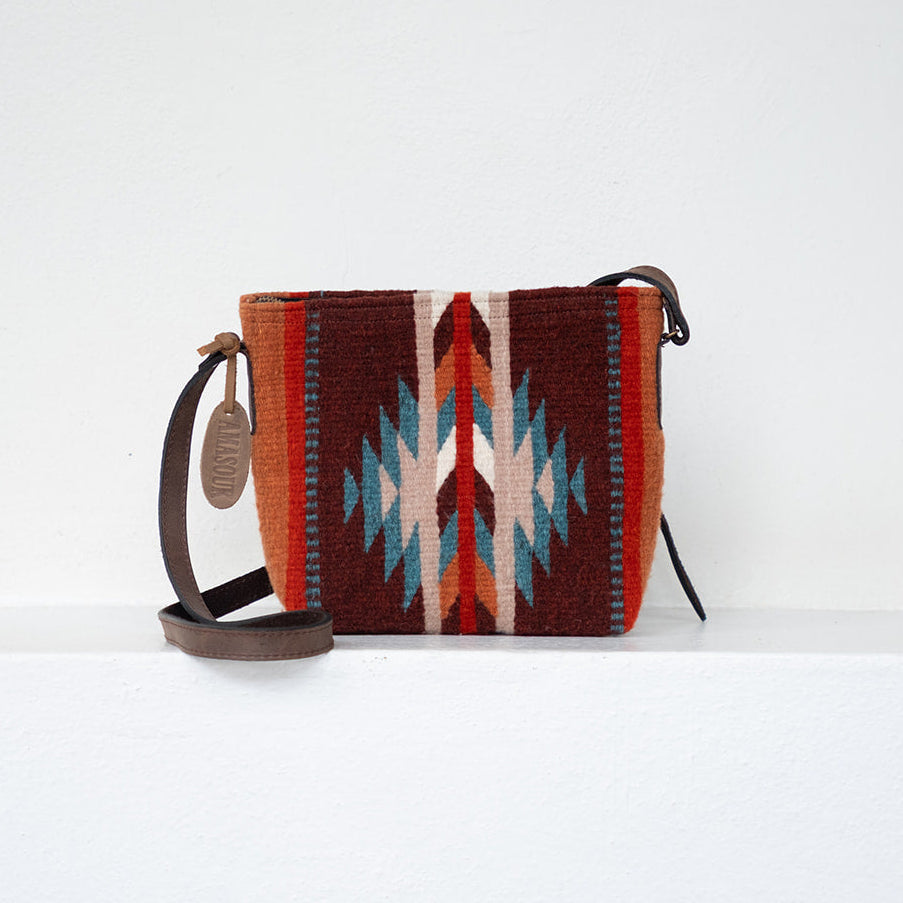
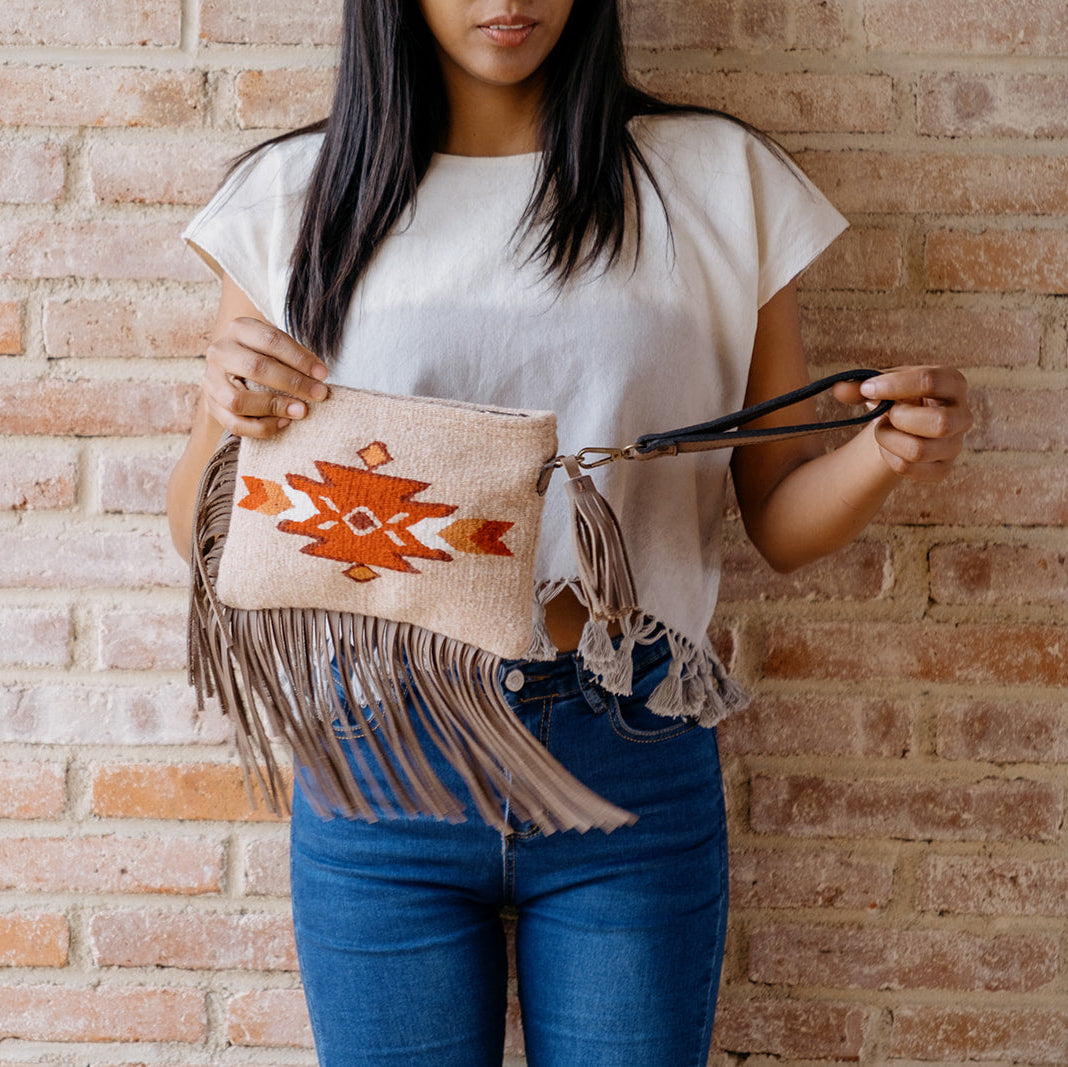
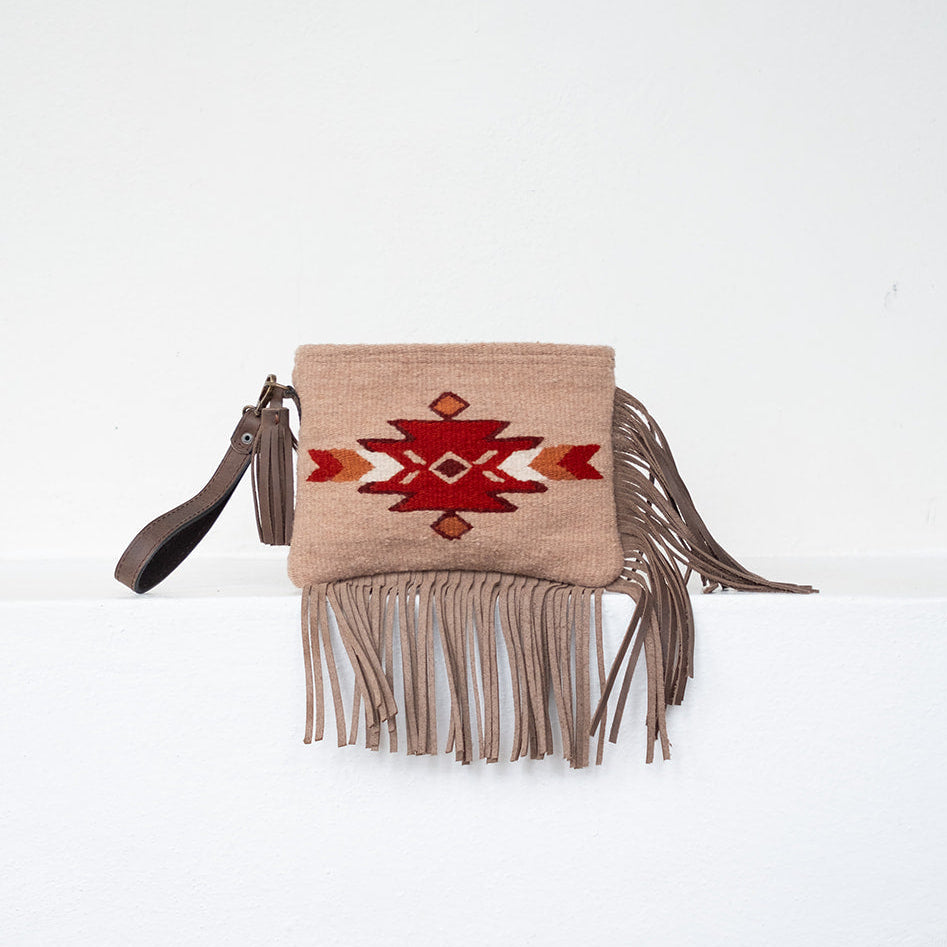
Diamonds characteristic of Teotitlán rugs appear alongside arrows that change color and create a sense of movement. Two-tone cinta de dientes motifs form textured blocks. Layered shadows bring dimension and richness to the compositions.
There is complexity here that may not immediately reveal itself, and that became one of our favorite lessons from the process.

Design as a Conversation
Collaboration does not mean arriving with a finished idea and asking someone else to make it.
For us, it means allowing the design itself to change.
A pattern that may appear beautifully restrained from a contemporary design perspective can feel almost too simple to an artisan who has spent decades mastering extraordinarily intricate weaving techniques. Something we find challenging may be second nature to her.
Those differences are where the interesting work begins.
Ideas are proposed. Reconsidered. Expanded. Simplified. Colors move. Patterns evolve. Someone pushes; someone else yields.
As the collection notes describe it, co-design begins to resemble a dance: a continual process of listening, proposing, trusting, and finding balance.
The finished piece belongs to that conversation.

The Colors of an Oaxacan Autumn
Our discussions about maturity eventually brought us naturally to autumn.
Autumn is itself a season of fullness—a cycle reaching abundance before transforming once again.
Autumn in Oaxaca carries its own language.
When we asked the artisans what the season meant to them, they spoke about family and memory. About colder days and gathering around the table. About hot chocolate and pan de yema. About Día de los Muertos, when loved ones who are no longer physically present are remembered and welcomed close again.
And they spoke about fields of cempasúchils—the sacred marigolds.
In bloom, their brilliant yellow and orange transform the landscape.
Those memories became color.
Each artisan selected shades that evoked the season for her: deep browns, terracotta, burnt orange, and gold—the colors of earth and leaves moving toward the end of their cycle.
But we did not want autumn to become muted.
AMASOUK has always been drawn to color, and the artisans’ work possesses an unmistakable chromatic vitality. So alongside those earthen shades came moss green with a subtle turquoise undertone, bringing luminosity and contrast, and dusty rose to soften and harmonize the deeper tones.
The result is a palette of terracotta, marigold, teal, clay, rose, and earth: rich and autumnal, but still very much alive.

Transformation Is Not a Moment
Perhaps that is what the butterfly ultimately came to represent for us.
We often talk about transformation as though it happens at a threshold: before and after, old and new, who we were and who we have become.
But life rarely works that neatly.
We are continually gathering experience. Carrying memories. Returning to people and places. Leaving others behind. Becoming something new, while remaining connected to everything that came before.
The monarch’s journey gave us a way to explore that idea across the collection, and guided the naming of the bags. Mariposa speaks to the butterfly itself; Néctar to nourishment; Vuelo to flight; Crisálida to transformation; Encuentro to gathering; Recuerdo to memory; Renacer to rebirth; and Candela to the light that guides us onward.
Each piece is handwoven in Oaxaca, bringing these ideas into wool through pattern and color, then finished with leather to become something intended not simply to be admired, but carried and lived with.
The Monarch Collection
The Monarch Collection is ultimately a celebration of women in their fullness.
Of the confidence that comes from experience. The knowledge carried through generations. The importance of community. The memories that remain with us. And the possibility that transformation continues throughout our lives.
It is also a celebration of collaboration—of what can happen when different perspectives meet at the loom, and each is given space to shape the other.
Tradition moves forward.
A pattern finds a new expression.
A season turns… and the butterfly takes flight.