There’s a big difference between knowing how something is made and actually seeing it happen.
Before traveling to Peru, I knew the basics of the embroidery behind our upcoming collection. I knew it came from Ayacucho. I knew each piece was embroidered by hand. I knew the tradition had been practiced in the region for generations. But over three days spent traveling between the workshop in Huamanga and communities high in the Andes, those facts took on a completely different meaning.
We met the people behind nearly every step. We watched wool being checked, patterns being tweaked, and women embroidering together. We ate a lot of food. We played tug-of-war. We visited a school at 14,000 feet while alpacas wandered nearby. And somewhere along the way, we started to understand just how much goes into the embroidery that will soon become part of AMASOUK.

DAY 1 — HUAMANGA
Where every belt begins—and ends.
Our first day in Ayacucho took us to the main workshop in Huamanga, where we were able to follow the remarkable number of hands and steps behind every embroidered belt.
This is where each piece begins: designs are developed, wool colors are selected and checked for consistency, and patterns are screen printed onto the wool to guide the embroidery. From there, the belts take one of two paths. Some are embroidered by artisans working at the workshop, while many travel out into communities across the Ayacucho region, where women complete the embroidery from their homes.
Once finished, the belts make their way back to Huamanga. Each one is cleaned and carefully inspected before the holes and buckle are added, then it’s packed and prepared for its journey north.
What made the day especially memorable was meeting the people responsible for each step—including the team members who regularly travel throughout the mountains delivering new work to embroiderers and collecting finished pieces.
Ayacuchano embroidery is a tradition with roots stretching back long before the Inca, to cultures including the Wari. Seeing this centuries-old textile knowledge moving through a very real, very active workshop made one thing clear: this isn't a craft preserved in the past. It is a living tradition, still being practiced, shared, and carried forward today.

DAY 2 — VINCHOS
Where work and community are intertwined.
On our second day, we traveled outside Huamanga to Vinchos and the home of Meche, the founder of the cooperative. Many of the group's longtime embroiderers and community leaders gathered there to spend the day with us.
And "workday" doesn't quite capture it.
There was embroidery, of course—but also plenty of conversation, a shared meal, games, laughter, and a surprisingly competitive round of tug-of-war. Women sat together stitching and chatting, their hands moving through patterns they have practiced again and again.
Watching them work up close gave us a new appreciation for just how much skill is hidden in every inch. Ayacuchano embroidery is known for its dimensional, tactile quality, created through layers of carefully worked stitches. One traditional technique is punto relleno, or fill stitch, which helps build the texture and richness that make the embroidery so distinctive.
But what stayed with us most wasn't any single stitch. It was seeing the social side of the craft: knowledge shared between women, work done alongside friends and family, and embroidery woven naturally into the rhythm of the day.

DAY 3 — CAYRAMAYO
Embroidery at 14,000 feet.
Our final community visit took us high into the Andes—to Cayramayo, at roughly 14,000 feet above sea level.
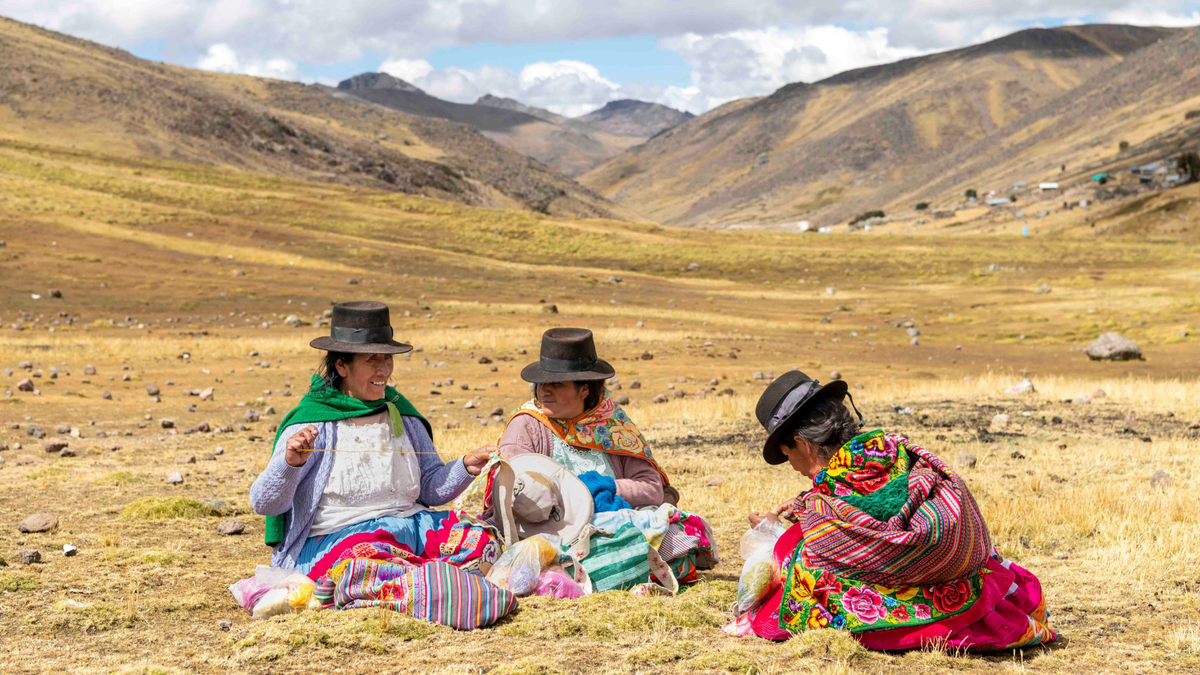
The drive alone helped put the embroidery into an entirely new context. Here, alpacas wandered freely across the landscape, mountains stretched in every direction, and the natural world that has long influenced Ayacuchano textiles was suddenly all around us.
We also happened to arrive on a special day: the community was celebrating the groundbreaking of a new children's recreation center. We joined the festivities, visited the local school, and eventually gathered with the embroiderers for a meal.
Soon, the embroidery came out.
Women sat together talking and laughing as they stitched, surrounded by the same Andean landscape that has inspired generations of textile makers. Flowers, plants, birds, and animals frequently appear in Ayacuchano designs, while materials from the region—including molle, chilca, tara, and cochineal—have historically been used to create textile dyes.
At 14,000 feet, those connections between craft and place felt especially tangible. What we had first encountered as beautiful embroidery was becoming something much bigger: a tradition shaped by landscape, community, generations of knowledge, and the women continuing to carry it forward by hand.


Bringing Ayacucho to AMASOUK
One of my favorite parts of AMASOUK has always been getting close to the process. Not just knowing where something was made, but knowing who made it, how they made it, and a little bit about the place where it came from.
These three days gave us that in a way I don't think a spec sheet, photograph, or Zoom call ever could.
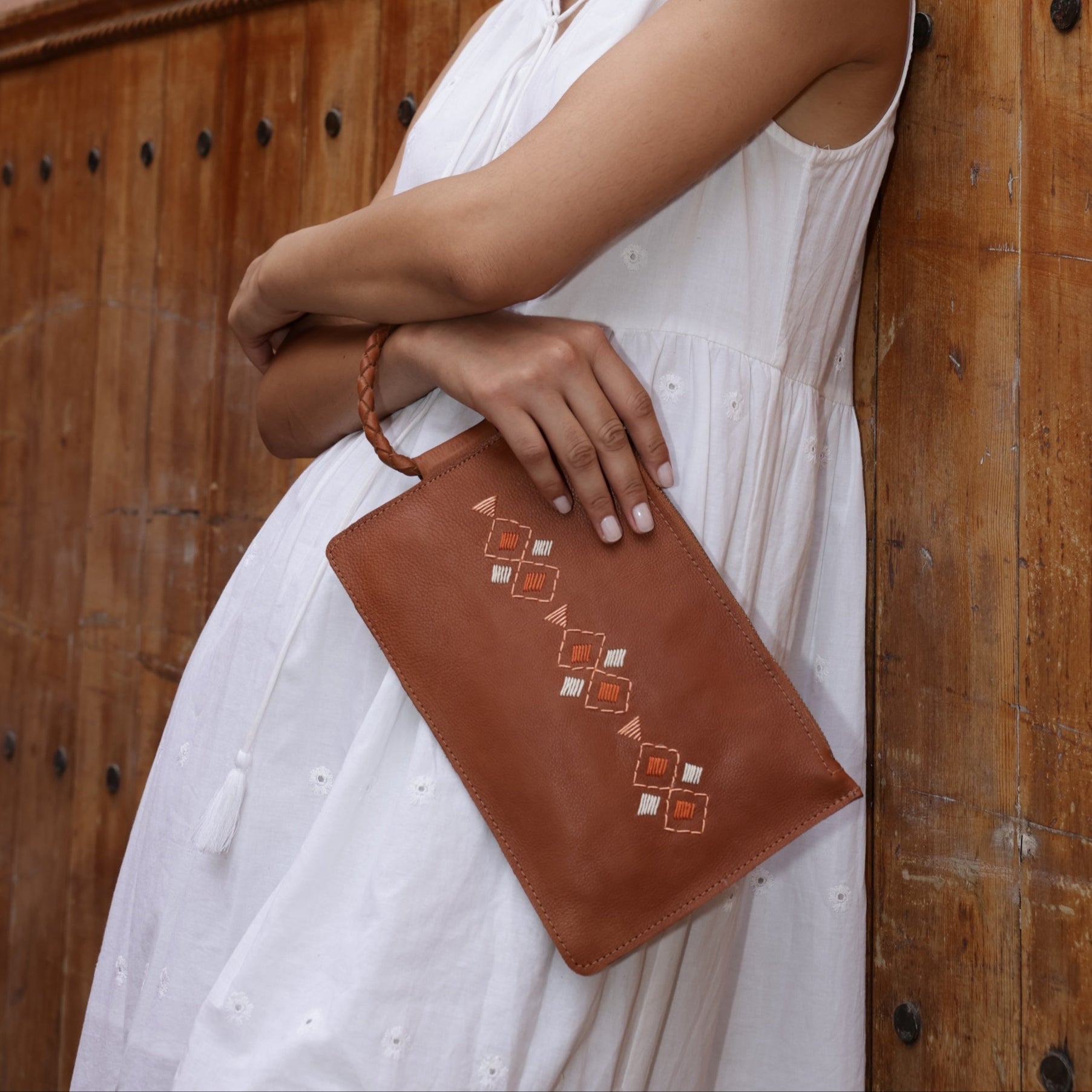
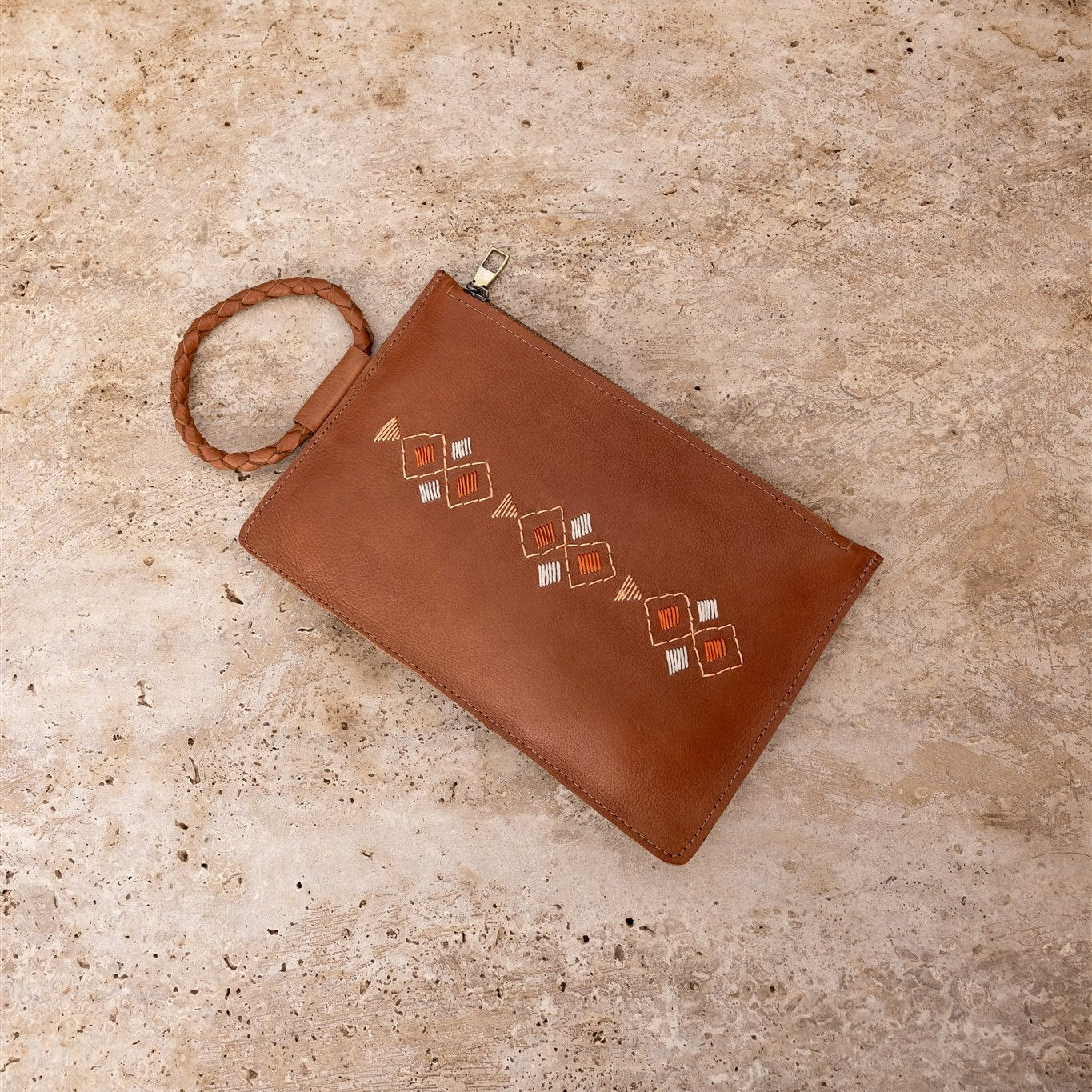
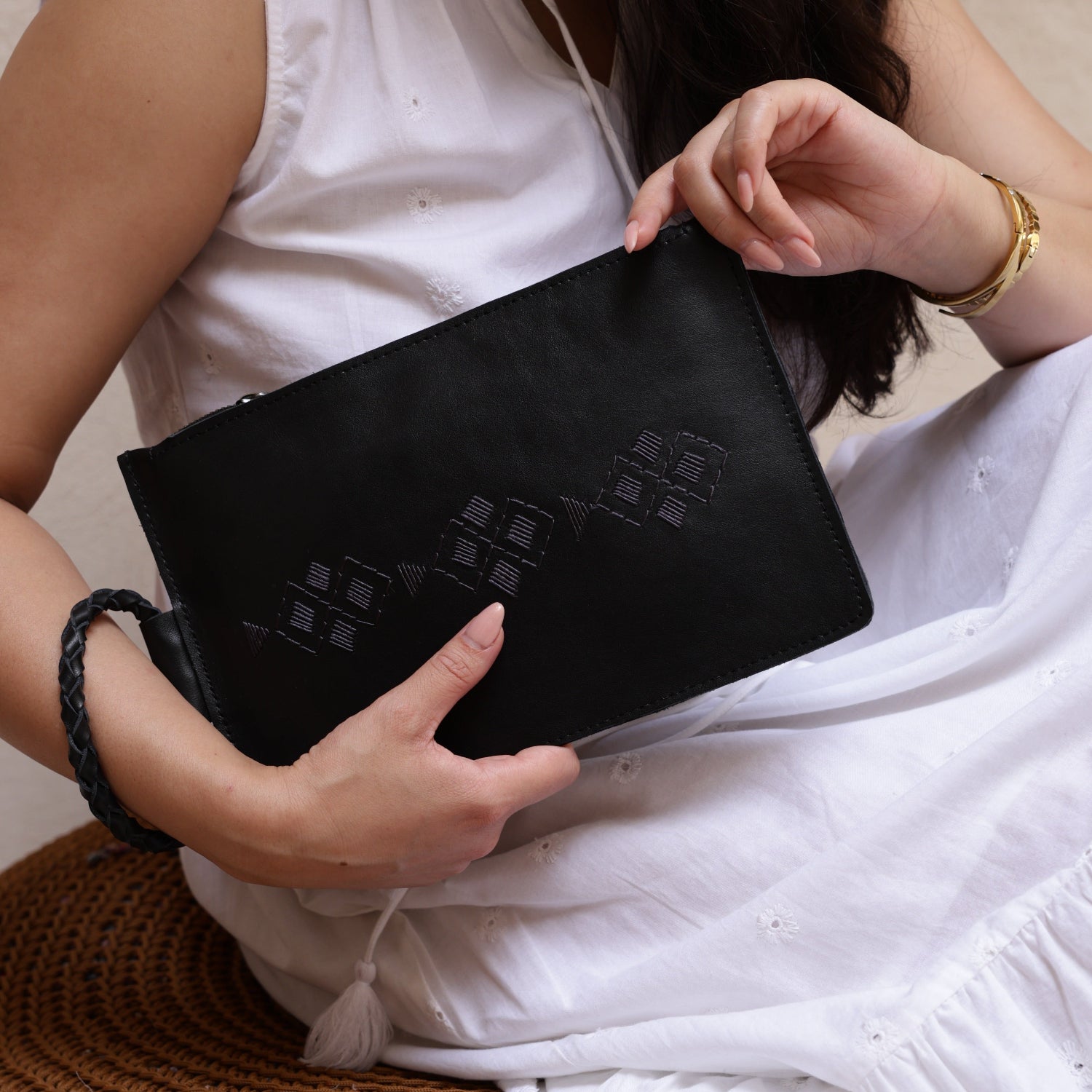
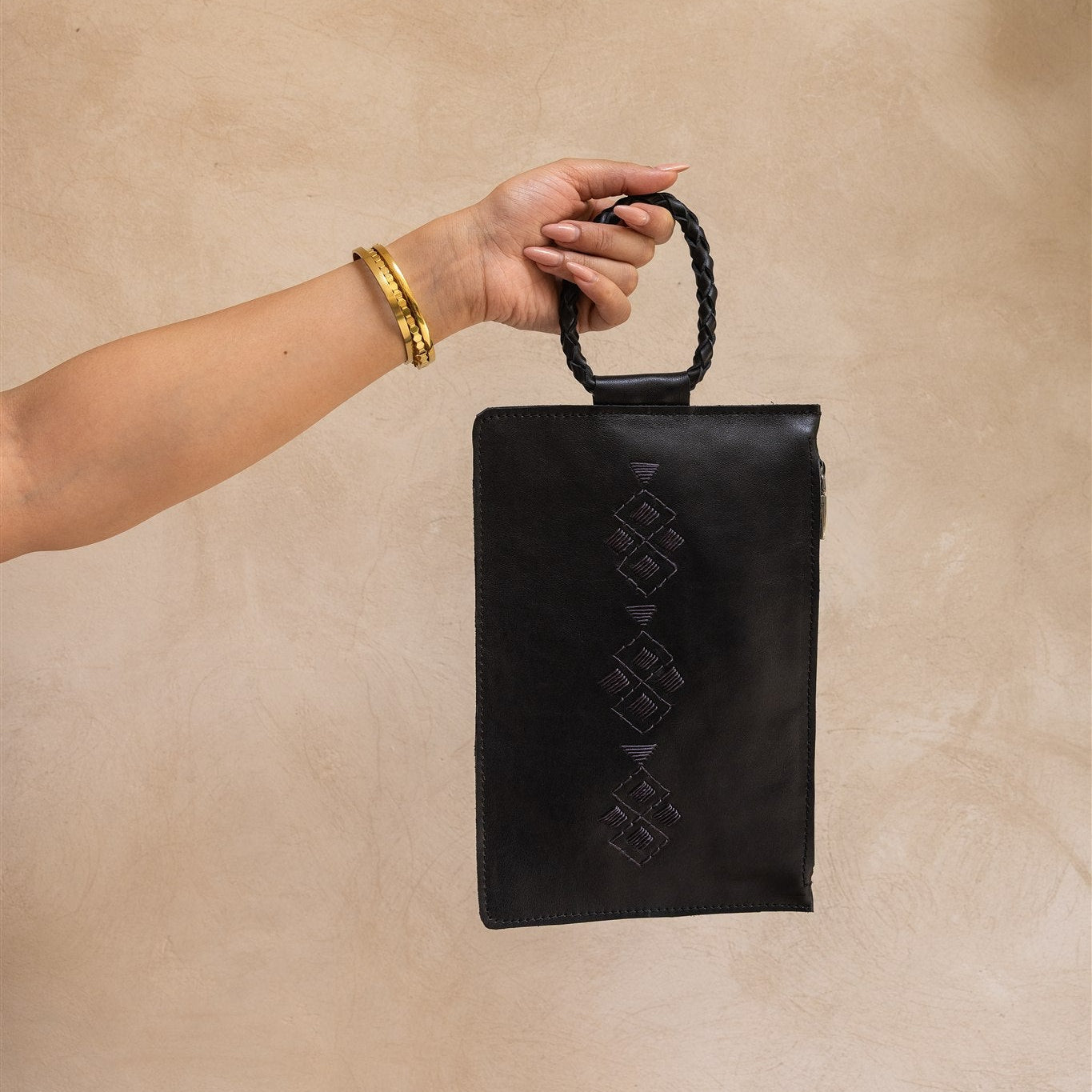
And now comes a part I'm especially excited about. The embroidery we saw being made in the mountains of Ayacucho will be paired with handcrafted leather bags from the souks of Marrakech.
Two places. Two very different craft traditions. Two groups of artisans bringing their own expertise to the same piece.
We can't wait to show you what they're making.