Inside the Museo Textil de Oaxaca
In Oaxaca, textiles are everywhere. They spill across market stalls in waves of color. They hang from workshop walls and rest, half-finished, on wooden looms. They appear in clothing worn for ordinary days and important celebrations, in homes and public spaces, in patterns whose geometry seems at once ancient and strikingly modern.
Spend enough time here, and you begin to understand that cloth is rarely just cloth.
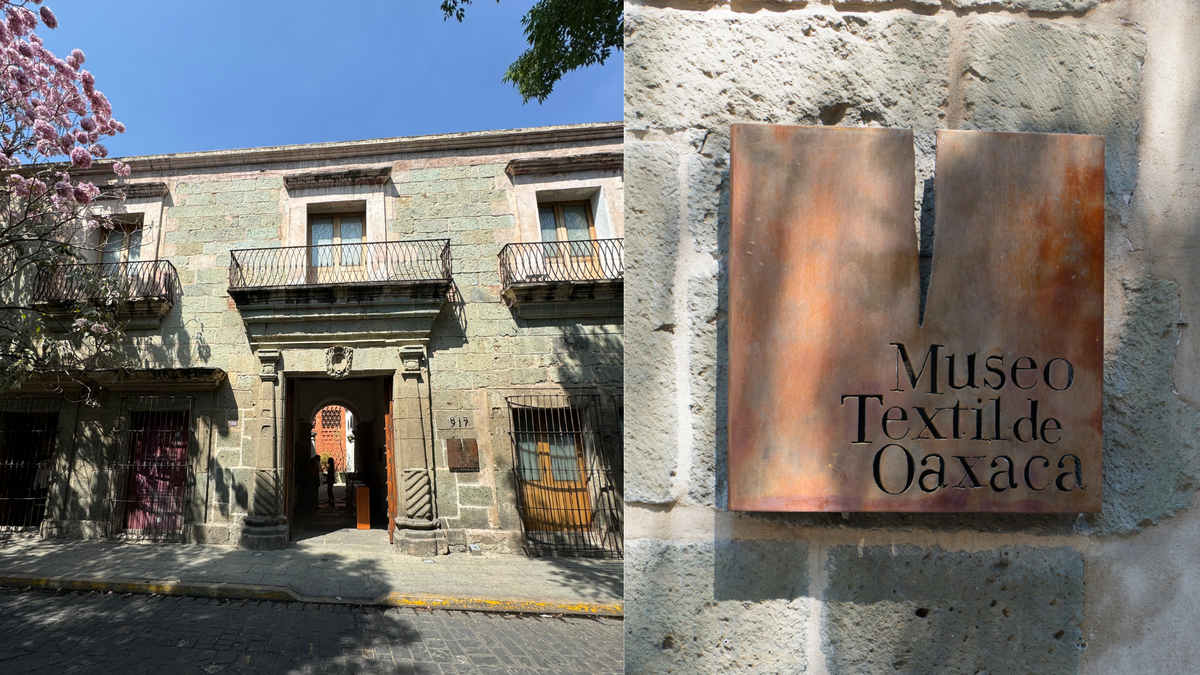
At the Museo Textil de Oaxaca, this idea takes center stage.

A Museum Devoted to the Language of Cloth
Tucked into the heart of Oaxaca City's historic center, the Museo Textil de Oaxaca occupies an elegant 18th-century house restored in 2007. The museum opened its doors the following year as a space dedicated not simply to displaying textiles, but to creating a meeting point between people, traditions, design, and contemporary art.
It is an important distinction.
Textiles can easily be presented as relics—beautiful objects from another time, carefully preserved behind glass. Oaxaca's weaving traditions, however, are very much alive. Techniques evolve. Colors shift. Artisans experiment. Knowledge passes from one generation to the next, sometimes faithfully and sometimes with a creative departure that pushes the work somewhere entirely new.
The Museo Textil de Oaxaca makes room for this continuum. Its exhibitions look across regions, eras, fibers, and techniques, inviting visitors to consider textiles as both cultural record and living form of artistic expression.
For anyone who has ever wondered what a piece of cloth can tell us, the answer here is: almost everything.

A Textile Is Never Only a Pattern
Our own relationship with Oaxaca has been shaped by time spent in Teotitlán del Valle, working alongside Zapotec weaving families whose knowledge of wool, color, and the loom has been cultivated over generations.
Watching a weaver work changes the way you look at a finished textile. You begin to notice tension. Rhythm. Repetition. The subtle decisions hidden within a geometric motif. You understand that a line is not simply a line when it has been built thread by thread, guided by hundreds of small choices along the way.
This is one of the quiet gifts of the Museo Textil de Oaxaca: it teaches you how to look.
A woven piece may reveal information about where it was made, how it was worn, which fibers were available, and the techniques understood by its maker. Motifs and construction can carry traces of community and history. Color may speak to local materials, changing technologies, trade, or individual creative vision.
The closer you look, the more expansive the story becomes.
Preservation as a Living Practice
Behind the museum's exhibitions is the less visible work of conservation. Textiles in the museum's collection are housed in a specialized storage space designed to protect delicate fibers and preserve pieces under appropriate conditions.
There is something deeply moving about this act of care.
A textile is inherently vulnerable. Wool, cotton, silk, and other fibers respond to light, moisture, handling, and time. The very qualities that make cloth intimate—its softness, flexibility, and closeness to the body—also make it susceptible to change.
To preserve a textile, then, is to preserve evidence of the hands that made it. Yet preservation in Oaxaca does not happen only inside a museum. It happens in workshops. Around family tables. At the loom.
We have seen this firsthand with the Zapotec artisans behind our Mexico Collection. Knowledge is carried through demonstration and repetition: how wool should feel between the fingers, how tension is maintained, how a pattern takes shape row by row. These are skills that cannot be fully captured in a book or catalog. They live in practice.
The museum preserves objects. Artisan communities sustain the knowledge that allows new ones to be made.
Together, they tell a fuller story.

Where Tradition Meets Experimentation
One of the most compelling aspects of Oaxacan textile culture is its refusal to remain static. Tradition here is not the absence of change.
The artisans we partner with in Teotitlán del Valle are deeply connected to inherited techniques, yet they are also designers, artists, and problem-solvers. They consider proportion and palette. They reinterpret familiar geometric forms. They respond to new ideas while maintaining a profound understanding of the craft that came before them.
The Museo Textil de Oaxaca was created in this same spirit of encounter—bringing tradition into conversation with contemporary design and art.
Its exhibitions remind us that textile history is not a straight line. Techniques travel. Materials change. Makers influence one another. A pattern can carry echoes of the past while feeling entirely at home in the present.
Perhaps this is why Oaxaca's textiles remain so captivating. They are rooted, but never still.

Learning to See the Hand
In a world accustomed to perfect repetition, handmade textiles ask something different of us.
They ask us to notice the human hand.
A slight shift in color. The rhythm of a woven line. The subtle individuality of two pieces created from the same design. These details are not interruptions in the work; they are evidence of its making.
Our time with Zapotec artisans has taught us to value these differences more deeply. When you know how long a textile takes to weave—when you have stood beside the loom and watched a pattern slowly emerge—the expectation of absolute sameness begins to feel counterintuitive.
The beauty lies in the relationship between intention and hand.
The Museo Textil de Oaxaca offers visitors a similar opportunity: to slow down, move closer, and look beyond the surface of a textile into the decisions, histories, and human knowledge held within it.

Following the Thread
There are museums that ask us to admire beautiful things.
The Museo Textil de Oaxaca asks us to understand them.
It reminds us that textiles can be archives without words. They hold stories of place and migration, technology and artistry, family and identity. They reveal what people valued, what materials they had at hand, and how creative knowledge moved through communities and across generations.
For us, these ideas feel especially close to home.
Every time we return to Oaxaca and spend time with our artisan partners, we are reminded that the textiles at the heart of our Mexico Collection are part of a much larger story—one that began long before AMASOUK and will continue long after us.
Our privilege is simply to follow the thread, to listen carefully, and to help carry the story forward.